
India emerging as a big global destination for contract manufacturing, unlike R&D outsourcing.

For instance, Dr Reddy's Laboratories has six active pharmaceutical units in Andhra Pradesh. The waste streams from the API units mostly contain potassium sulphate, caustic lye, potassium chloride, potassium sulphate and sodium sulphate salts.
Dr Reddy's Laboratories, Nicholas Piramal and other Indian drug makers are relying on niche and smaller value, acquisition strategy for growth owing to global slowdown and failure of big-ticket acquisitions in the past.

This increase is despite the decreased growth of drug sales in the US - the world's largest market - which has seen a tightening of regulations and aggressive competition.
While the private companies have to spend Rs 8-12 crore (Rs 80 to Rs 120 million) on building and other infrastructure for each school, the government would provide 30-50 acre land free of cost to the developers of these schools.
Dr Reddy's Laboratories, Jubilant Organosys, Orchid Chemicals, Aurobindo Pharma and Shasun Chemicals and Drugs are among those who have borrowed either to expand locally or to acquire companies abroad, but are now struggling to repay the dues, analysts say. Some of the companies' debt now exceeds their market capitalisation, as local and global investors sold stocks on concerns over slowdown and falling revenues. A few drug makers may be forced to sell assets to repay debt.
Cymbiotics, a US-based bio-pharmaceutical manufacturer, has entered into a joint in-licensing agreement with Elder Pharmaceuticals to manufacture and market three of its drugs for pain management, diabetes and dermatology in the Indian market.
The recent pullout by ICICI Venture and Citigroup Venture from a three-year-old drug discovery partnership with Dr Reddy's Laboratories points to angel investors' growing aversion to risk in pharma and biotech firms, say experts.

If most of the top 10 Indian drug companies were less than Rs 500-crore (Rs 5-billion) turnover ones a decade earlier and were focused only on domestic business, now they are companies with annual businesses ranging from Rs 2,000-Rs 6,000 crore (Rs 20-60 billion) and with operations spanning 60-100 countries and employing 3,000-5,000 people.

An analysis of the growth rate of 15 leading drug companies for the third quarter of 2008-09 show excellent performances in domestic turf have been often marred by the poor show of their acquired assets.
The National Pharmaceutical Pricing Authority has revised prices of 440 medicines. Around 300 medicines have seen price cuts, while the others have seen a hike, sources said. The extent of the revisions is not known as yet.

From the 30-share pack, Sun Pharma, TCS, Tech Mahindra, NTPC, Wipro, UltraTech Cement, Dr Reddy's Laboratories and Infosys were the major gainers, jumping up to 3.99 per cent. In contrast, Tata Steel, Nestle, Titan Company, PowerGrid, Reliance Industries Limited and State Bank of India were among the laggards.
Ranbaxy is understood to have pulled out of the race to acquire German pharmaceutical company Merck's generic business on concerns of over-valuation.
As many as 15 companies across the world have lined up generic variants of Pfizer's Zoloft (Sertaline HCL), for which the exclusive six-month marketing period granted to the successful patent challenger, Teva of Israel, ends on Tuesday.
This will be the largest M&A by an Indian firm, to be complete by January-end.

Research and development (R&D) spending by BSE 100 companies has grown steadily, rising from 0.89 per cent of revenue in FY20 to 1.32 per cent in FY24, averaging around 1 per cent over the period in-between, according to data compiled from Bloomberg and company annual reports. Also, these companies more than doubled their R&D spending in absolute terms over these five years: From Rs 25,041 crore to Rs 63,072 crore. While this reflects a prioritisation of innovation, corporate R&D investment remains relatively conservative.

Other developers that have sought additional time include Alstom Bharat Forge Power, Sesa Sterlite Ltd and Cognizant Technology Solutions. Vedanta Aluminium has asked for extension of the validity of the approval granted by the board for setting up an SEZ in Odisha beyond May 22.

This is not just a Ranbaxy or Wockhardt problem, says K Satish Reddy
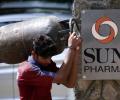
Credit Suisse analysts cut their rating on Sun Pharma stock to 'neutral' from 'outperform

According to sources, around 10 crore doses of the Sputnik V vaccine is likely to be imported for emergency use in the country in the next six to seven months.

Indian pharma firms under European drug regulator's scanner.

Equity benchmark Sensex gained 37 points on Thursday, tracking gains in index majors Kotak Bank, L&T and Bharti Airtel amid a largely negative trend in global markets. After a largely choppy session, the 30-share BSE index ended 37.87 points or 0.06 per cent higher at 60,298 after starting the trade on a weak note. During the day, it hit a high of 60,341.41 and a low of 59,946.44.

Benchmark indices settled lower on Friday, with the Sensex declining 111 points on the back of a sharp fall in index heavyweight Reliance Industries. The BSE benchmark went lower by 111.01 points or 0.21 per cent to settle at 52,907.93. During the day, it tanked 924.69 points or 1.74 per cent to 52,094.25. The NSE Nifty dipped 28.20 points or 0.18 per cent to close at 15,752.05.

Drug firm MSD has decided to enter into voluntary licensing agreements for investigational oral antiviral drug candidate 'Mmolnupiravir', which is being studied for the treatment of Covid-19, with Indian drug firms Sun Pharma, Cipla, Dr Reddy's, Emcure Pharma and Hetero Labs, its Indian arm said on Tuesday.
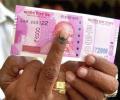
These are the top buyers of the scrapped electoral bonds, the data for which was released by the Election Commission on Thursday.
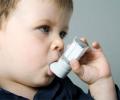
Cipla is recalling the drug for failed impurities and degradation specifications.
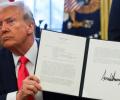
Industry insiders in India warn that any such move in the pharmaceutical sector could be counterproductive for the US as it may face increased drug shortages if tariffs are imposed on such imports.
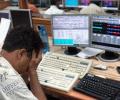
Investors' wealth tumbled Rs 86,741.74 crore on Wednesday, mirroring weakness in the global equity markets amid escalating tensions between Russia and Ukraine. The BSE benchmark Sensex slumped 1,227.18 points to 55,020.10 during the day in line with a global selloff. It finally settled at 55,468.90, lower by 778.38 points or 1.38 per cent. Surging crude prices and foreign capital outflows also weighed on investor sentiment.

Russia's Sputnik V vaccine is currently being manufactured in India by Dr Reddy's Laboratories.
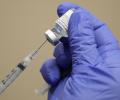
These vaccines are Sputnik V vaccine (in collaboration with Dr Reddy's), Johnson & Johnson vaccine (in collaboration with Biological E), Novavax vaccine (in collaboration with Serum India), Zydus Cadila's vaccine, and Bharat Biotech's Intranasal Vaccine.

During the meeting, scheduled to be held through video conference at 6 pm on Tuesday, the Department of Biotechnology will make a presentation and also coordinate with all the participants, sources added.

Representatives from seven vaccine makers -- Serum Institute of India, Bharat Biotech, Dr Reddy's Laboratories, Zydus Cadila, Biological E, Gennova Biopharma and Panacea Biotech -- will be participating in the meeting.

Benchmark stock indices Sensex and Nifty closed with losses in highly volatile trade on Thursday as banking and financial stocks retreated amid a weak trend in global equity markets. The 30-share BSE Sensex declined 89.14 points or 0.15 per cent to settle at 57,595.68. During the day, it touched a low of 57,138.51 and a high of 57,827.99. The broader NSE Nifty dipped 22.90 points or 0.13 per cent to settle at 17,222.75.
